Sunday, September 13, 2020

11 September 2020 Fantastic Caverns

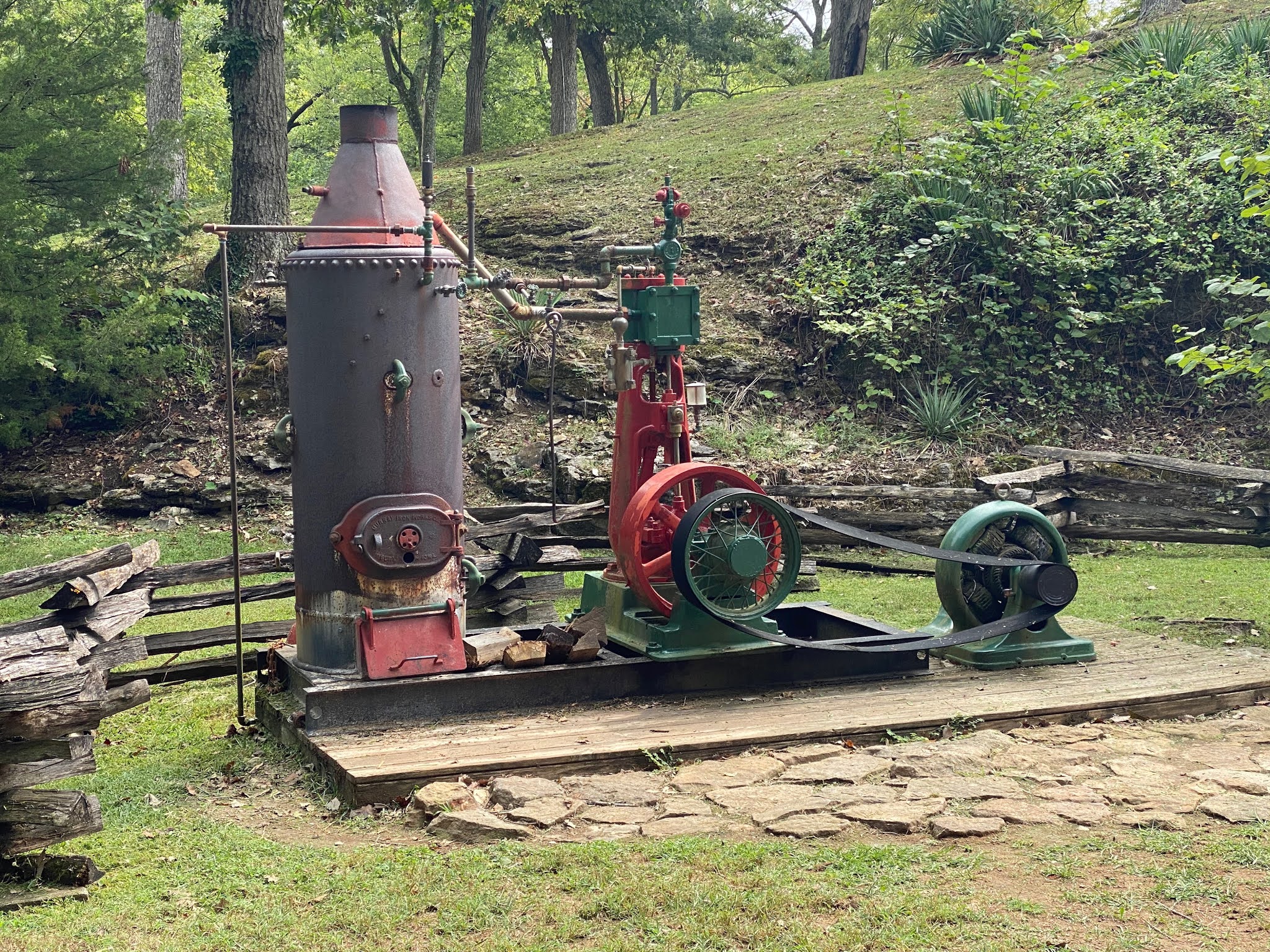
 We have seen billboards for Fantastic Caverns since we entered Missouri. It’s the only drive through cavern system in the USA. We were interested to learn that there are over 10,000 caves in Missouri! Since it was still a misting and cool day with the threat of heavier rain, we decided an underground tour would be a great way to spend a day. The drive over to Springfield was short and we soon found ourselves at the Caverns. The cavern was discovered by the land owner in 1862 when his dog disappeared down a hole and he had to go in to find him. The owner kept the existence of the cavern quiet until after the end of the civil war because he did not want one of the armies (Union or Confederate) confiscating it and his home to use for barracks or to search for bat guano (Used to manufacture Salt Peter). In 1867 he advertised in the local newspaper for cave explorers and was surprised to have 13 women from the Ladies Adventure Club show up. They climbed through the small hole into the cavern and mapped the cavern system out. In the 1870s, the cavern opened for walking tours. In the 1890s, they installed the first generator and put in incandescent lights, a relatively new invention at the time. In the 1920’s and 30’s, they opened a speak easy in the cavern. Some of the first bands to play there later went on to start the music theaters in Branson Missouri. The owner also grew mushrooms in the cavern during the great depression to get by. In the late 1940s, they began doing tours with Wiley’s Jeeps and towing trailers full of paying guests. 


The tour took about 55 minutes and cost $28 per person. It is not the most awesome cave we have toured, but it was a unique experience riding through the caverns.  After our cave tour, we decided to find a local brewery and end up at the Lost Signal brewery in the center of town. We had a couple of beers and some BBQ nachos before heading back to the Wanderer.


Entrance Sign

1940 Willy's jeep and camper

1890's Original Steam Generator

Cave Formation

Driving Tour

First Explorers left their mark

Cave Formation

Cave Formation

Cave Formation


9 September 2020 Platte City to Carthage MO

 The weather was cool and misting, perfect for towing. The drive from Platte City to Carthage was only 3 hours, so we were in no rush. We managed to avoid any heavy rain. We are staying at the Coach Light RV Park ($24 per night, weekly discount) south of Carthage and east of Joplin. The RV park is part of a RV Dealership next door. The sites are gravel and fairly level. They do have concrete patios but no tables or fire pits. The majority of the park is long term leasers, but they are all well maintained and picked up. We chose to stay in the portion of the park with no trees so we could get sat TV reception. Water pressure is very good and the WiFi signal strong but slow. Our primary reason for being here is George Washington Carver National Monument, but there are some other interesting sites within an hour or so from our location. 

7 September 2020 Historic Weston

 With our last free day in this area, we decided to head over to the historic town of Weston. We had heard that there was a good winery and brewery in addition to a quaint downtown area. We arrived in town late in the afternoon. The streets were so narrow, they were a bit difficult to navigate with the Behemoth. But we found a central parking place near the brewery and winery. We decided to visit the winery first and do a tasting. We were again pleasantly surprised at the quality of some of the wines at the Pirtle Winery. Our host turned out to be the owner and head vintner! We had a great time talking with him about his wines as we tasted. With a new crop being picked as we drank, he was anxious to move stock and offered us some great discounts. We picked up 6 bottles made with their locally grown Norton grapes and even a Blueberry Wine (It was surprisingly dry!). We had them open a bottle for us and we went out on their wonderful patio in the shade and enjoyed a relaxing bottle of wine. Leslie decided it was a good time to get some post cards done as well. We finished our bottle just as they were closing the tasting room, so we went back to the Behemoth and decided to drive to the old downtown. The buildings lining main street date back to the 1860s. Unfortunately, most of the shops had already closed for the day but we enjoyed checking the old town out before heading back to the Wanderer. With the number of motorcycles parked at the brewery, we decided it would be wise to skip a visit this time. 

Pirtle Winery

Winery Sign

Old town Weston

Sharing a wonderful bottle of wine


6 September 2020 Exploring KC and Arabia

 While looking for interesting things to do in Kansas City Missouri, Leslie found out there was a Chuy’s Mexican Food Restaurant in the south part of Downtown. It has been a long time since we were able to indulge our Mexican Food Sunday’s cravings. 

So right after watching Church on YouTube, we headed for downtown. The area around where Chuy’s was located is an area in transition, and we did not like some of the graffiti that was on the walls of some of the abandoned builds, but we took a chance to enjoy some of the first really good Mexican food we have had for months!. Of course we had to have margaritas to go with our green chili enchiladas! After indulging ourselves, we decided to check out the Steamboat Arabia Museum ($18 per person admission) on the north side. We had considered going to the National WW1 museum, but it was only going to be open for another 2 hours and we did not think we could see that much of it in that short a period. The Steamboat Arabia was a good choice. The Steamboat Arabia sank on the Missouri River in September 1856 when it hit an underwater log snag. The snag plowed into the hull of the boat like a torpedo (The log was later recovered still embedded in the hull) and the boat sank in minutes with 200 tons of its cargo. Everyone aboard was able to make it safely to shore except one poor mule that went down with the boat. The river and mud quickly swallowed the wreck and nothing was salvaged. 132 years later, a group of Kansas City treasure seekers (A Father, two sons and two local businessmen) identified the place where the Arabia had sunk. Now ½ mile away from the current river channel and buried 45 feet deep under a farm field. Using their own funds, and doing most of their own labor, they dug down to the wreck during the winter of 1987/88 and recovered tons of goods that had been in the ship’s hold along with the boilers and portions of the ship’s hull. They had planned to sell what they found, but when they discovered the extent of the find, they decided instead to preserve the find as a collection and create a museum. Thousands of items from shoes (4000 pairs of shoes and boots), dishes (from England), silverware (from Spain), tin goods, iron pots/pans, hundreds of tools, barrels of nails and screws, medical items, food items (many still edible) and clothing. They have completed restoration of only 2/3rds of the items recovered so far with restoration still ongoing. It was like walking into a 1856 Walmart of home goods. We even got to meet one of the original five explorers who came by to ask if we had any questions. We thoroughly enjoyed our visit.  


Entrance Sign

Some of the recovered dishes

Recovered wood and tin items

General Store items

Recovered Tools

More recovered tools

Even more recovered tools

Can never have to many tools

larger tools

 fasteners and hardware to use with all those tools

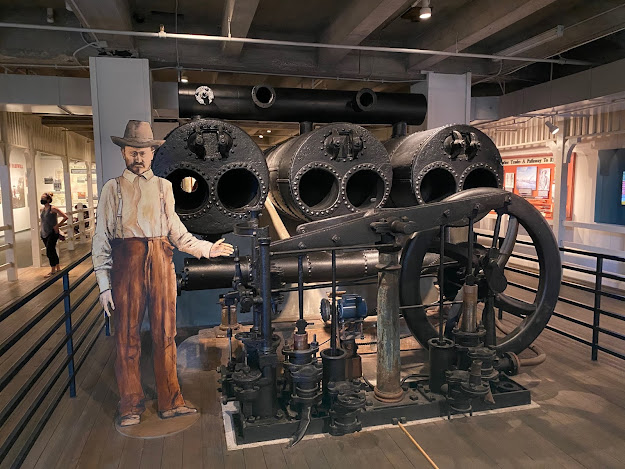
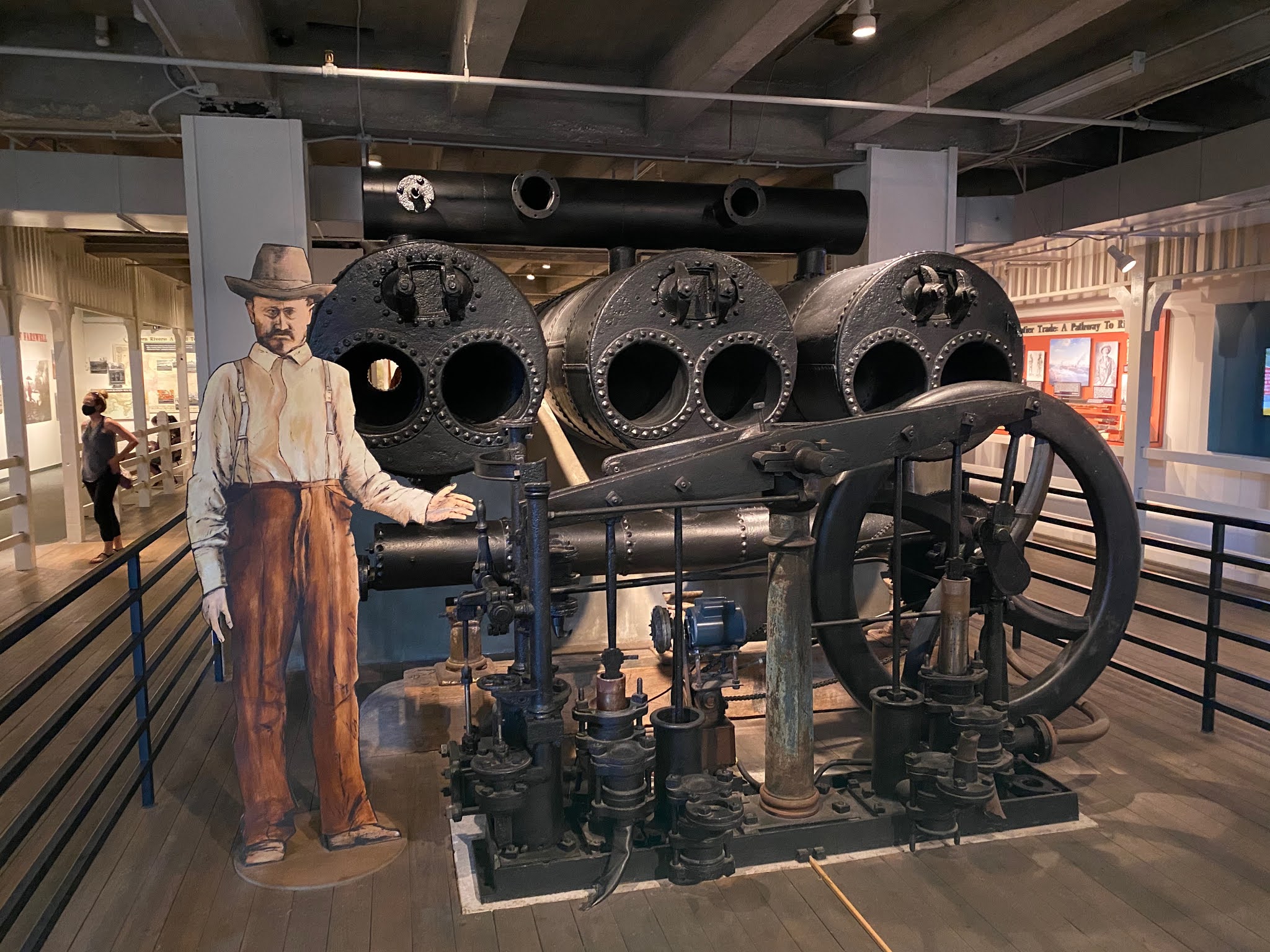
The boilers

One of the two side paddles

Stern section and rudder


Saturday, September 5, 2020

5 September 2020 The Pony Express

 We returned to St. Joseph today to visit the Pony Express Museum. The Museum is housed in the building which was the 1858 stables for the eastern terminus of the famous Pony Express.  The first pony express run was on 3 April 1860. Johnny Fry was the first westbound rider of the relay. He rode 80 miles of the trail, which covered almost 2,000 miles. Local legend says that at a farm close to Cold Springs, several young ladies would wait for Johnny Fry to pass so they could hand him cakes and cookies. The cakes and cookies were shaped like doughnuts to make it easier for him to catch and hold while riding.  Riders set off from both the eastern and western ends of the Central Trail between St. Joseph, MO and Sacramento, CA. Riders rode between 75 and 100 miles, changing horses roughly every 10 miles. The fastest delivery time was 7 days, 17 hours. In the summer, delivery averaged 10 days and in the winter 12-16 days. Cost was $5 for a half pound letter. A maximum of 20 pounds of mail would be carried by a single rider. Riders rode through summer heat and winter blizzards for the 1,996 mile trail. Over 190 riders were hired, 480 horses used across the route, and stations established for changing horses and resting riders every 10-15 miles. Other methods of delivery took three weeks to two months. The Pony Express shut down in October 1861after the telegraph was finally extended to California (The final mail packet was not delivered until mid November). The Pony Express went bankrupt shortly after the first telegram was sent coast to coast on 24 October 1861. It wasn’t until 1868, when the railroad was finally linked coast to coast, that the speed of mail delivery was matched. A rather ignominious ending to the iconic Pony Express.  The Museum was quite interesting and well worth the $7 entrance fee. We were surprised that many of the riders lived into their 80s. We were also surprised by how many converted to Mormonism during their early lives. On the way back to the Wanderer we decided to check out one of the local wineries. We stopped off at Jowler Creek Winery, about 6 miles from where we are staying. It was a hot and humid afternoon, but we picked out a couple of wines to try and enjoyed sitting in the shade and watching people. A great way to spend a hot sunny afternoon. It reminded us of our favorite winery, Lost Oak, in Texas. We ended up buying a couple of bottles of wine to take with us. 


Pony Express Stable entrance

Pony Express Rider gets ready to head out.

Bowler Creek Winery


4 September 2020 The Good Old Homestead

 We hit the road early for the 2.5 hour drive to Homestead National Monument of America. The NM is located just outside Beatrice Nebraska, on the land that was the first application for a homestead. The application was submitted by Daniel Freeman on 1 Jan 1863. The story told is that he convinced the county clerk to open the office at Midnight on 1 Jan 1863 so he could submit his claim. The Homestead Act was passed in 1862. Under the act, an applicant could receive the Patent (deed) to 160 acres after they occupied the land for 5 years, farmed the land for that period and built a house on the land. Over 270 million acres of public lands were applied for under the act. Applicants included single women, immigrants from many countries, former slaves and many soldiers following the Civil War. Roughly %60 of the applicants lasted the five years to receive their land patient. The last application for homestead land was in 1974. The Homestead act was repealed in 1976 for the lower 48 states and in 1986 for Alaska. The visitor center was open and we were able to take turns viewing the exhibits and watching the movie (while the other stayed in the truck with Etta). David got our passport stamp and Leslie bought her post cards. Beyond the visitor center, there is a research center where you can look up ancestors that might have homestead. But neither one of us have ancestors that homesteaded. Those folks lived a very hard life. Roughly a third of the homesteads are still in the hands of the original families that received their Homestead Patient. Many have grown into large family owned/run farms across the Midwest. On the way back we stopped off in St. Joseph at a brewery that would accept dogs, The Angry Swede. We also ordered some dinner from a nearby restaurant, Marco Polo, that delivered to the brewery. The beer was good, but the food was not. So a bit of a mixed bag.


Entrance Sign

Visitor Center


3 September 2020 Where’s the Beef?

David finished working a bit earlier than we expected, so we took advantage of the extra time to complete one of our must do’s, a steak dinner in Kansas City. After looking over the ratings, we choose to go to the 801 Chop House in downtown. Being a bit leery of downtown areas due to the nation wide riots, we made plans to be out of downtown before dusk. We picked wisely. The steak dinners we got at 801 Chop House were AWESOME!! Definitely worth the nearly $400 cost (With a really nice bottle of Jordan Cabernet (2016)). David got the KC Strip and Leslie the Tenderloin Medallions. Even the sides were great (scalloped Potatoes and Brussels Sprouts). Our Waiter, Sean, did a great job and was very friendly. The downtown area of KC was really quite nice and very quiet. It reminded us a lot of downtown Fort Worth.


We found the Beef!

A wonderful Dinner